Mosaics in the Mediterranean
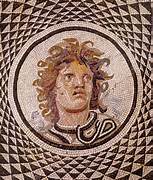
MOSAIC FLOOR WITH HEAD OF MEDUSA AD.115-150
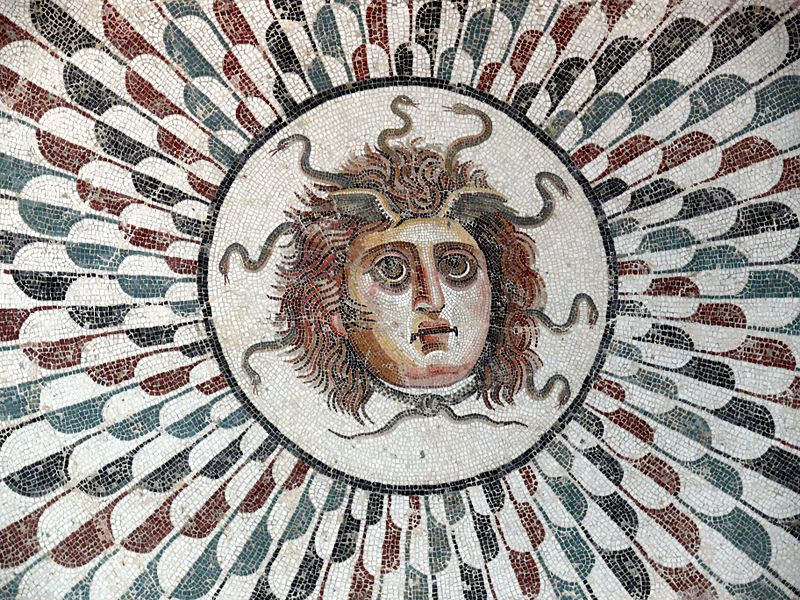
MOASIC FLOOR WITH HEAD OF MEDUSA FROM ROMAN BATHS 2ND CENTURY AD
The variety of mosaics created in the Roman Imperial Period highlight the artistic and cultural diversity that existed within the provinces united under the rule of the Roman Empire. Although many of the provinces under Rome’s domain subscribed to the same religion (whether this was by force or choice is an entirely different issue) their artistic styles and interpretations of their shared mythology varied. Figure 1 is a floor mosaic, made of stone tesserae created in Rome, Italy between 115-150 AD (Getty 2025). The foreground of the image depicts Medusa’s head while the background features a black and white triangular patterning. The presence of Medusa in Roman piece of art suggests that Romans had adopted many of the Greek mythological figures into their own culture. What is fascinating is the depictions of Medusa in the Greek’s mythology and their artwork was objectively hideous and monstrous. An artwork of Medusa was meant to strike fear into those who gaze upon her gruesome face (Foster,2003). However, this Roman mosaic, despite depicting the same mythological figure (the gorgon Medusa) as Greeks shares none of these monstrous traits. Firstly, the figures hair is blond and instead of snakes one sees blond curls. Additionally, the face itself is human, resembling a young male adult. This depiction seems to be drawn from the Hellenistic kings, particularly Alexander the Great, whose hair style and features closely resemble those of Figure 1. The colour scheme of the mosaic supports this understanding, with the figure having fair skin, blond long hair and strong masculine features (Getty 2025). Such a shift in imagery from a monstrous beast to a young attractive male suggests that, to the Romans the meaning of Medusa had strayed from its Greek origins and represented something else entirely. Thus, it is possible that to the Romans the gorgon Medusa was a figure of power. This is evidenced by the fact that the Romans often chose to liken prominent of status with Roman mythological figures. While usually this meant representing roman leaders with features of the gods and heroes Figure 1 demonstrates that this extended beyond the god-like man with previously villainous figures being celebrated for their power and ability to vanquish their enemies. Secondly, the background of this image contains black and white triangles of stone tesserae formed to create an optical illusion in which they create a circle in motion (Getty,2025). This is called a ‘spinning shield motif’ and was prominent in roman mosaic flooring (Getty 2025). However, the intricacy of the background is indicative of trained skilled artists who were allowed the time to come up and subsequently execute such elaborate patterns. Additionally, this background suggests that Romans (or at the elite roman families) possessed excess wealth which they could utilise to create such elaborate art. A stark comparison to this Hellenic depiction of a Greek myth is Figure 2, A medusa head mosaic from a Roman bath house in Thysdrus, a roman province in Carthage (modern day Tunisia) (Theoi,2017). The mosaic dates around the same time as Figure 2 (2nd century) however, the artistic depiction of Medusa is vastly different. This Medusa with its colourful snakes and monstrous features is much more reminiscent of the traditional gorgon in Greek mythology. The head not only has the traditional vipers but (bat?) wings on the brow but the colours are more vibrant and harsher than Figure 1’s, the reds and greens contributing to the fierceness of the face. The face itself is reflective of a different art style altogether. Figure 2’s face is round with disproportionately large eyes and a particularly sharp nose, differing significantly from the realistic one seen in Figure 1. Thus, it is interesting that these two mosaics, despite being created within a century of each other had such obvious stylistic differences. One possible explanation is that there were different perceived symbolic meanings behind Medusa across the roman empire. Thus, the Carthaginians may be using the image of Medusa in its traditional fashion, as a ‘talisman’ of sorts to ward off evil spirts (Foster 2003). While conversely Figure 1 may be more of a homage to the power and status of the romans powerful Hellenistic ancestors. However, the Carthaginians despite their artistic differences still had a similar culture to the romans. For example, the fact that Figure 2 mosaic was present in a roman bath suggests that the people of carthage were bathing in traditional roman bathhouses, Additionally, the background (with the except of its colour) is a design found many roman mosaics (Theoi 2017). Therefore, while roman provinces adopted similar cultural practices and religious practices as Rome they varied in artistic representation and religious interpretation.
Bibliography
Foster, H. (2003). Medusa and the Real. RES: Anthropology and Aesthetics, 44(1), 181-190.
Getty . (2025). Mosaic Floor with Head of Medusa. Retrieved from Getty Museum Collection: https://www.getty.edu/art/collection/object/103SQK?canvas=131116a9-ab08-4d5b-a19b-0ef246d245dd&tab=bibliography
Theoi. (2017). Z47.6 THE HEAD OF MEDUSA. Retrieved from Theoi Project: https://www.theoi.com/Gallery/Z47.6.html
 Siobhan ANCH3570 website